A panel that looks untouched by flame can still be compromised by smoke and heat you can't see — which makes visual inspection the least reliable way to decide if it's safe to re-energize.
Executive Summary. Fire damage to electrical panels involves more than the visibly burned components — smoke contamination, heat-affected insulation, and water exposure from firefighting response can each compromise a panel that shows little or no direct fire damage. This article covers the specific damage mechanisms fire introduces to electrical panels, why energizing a fire-exposed panel without testing is a genuine safety hazard, the assessment process and recovery levels, and the factors that determine whether recovery or full replacement is the appropriate path.
Why Fire Damage to Panels Is Uniquely Tricky
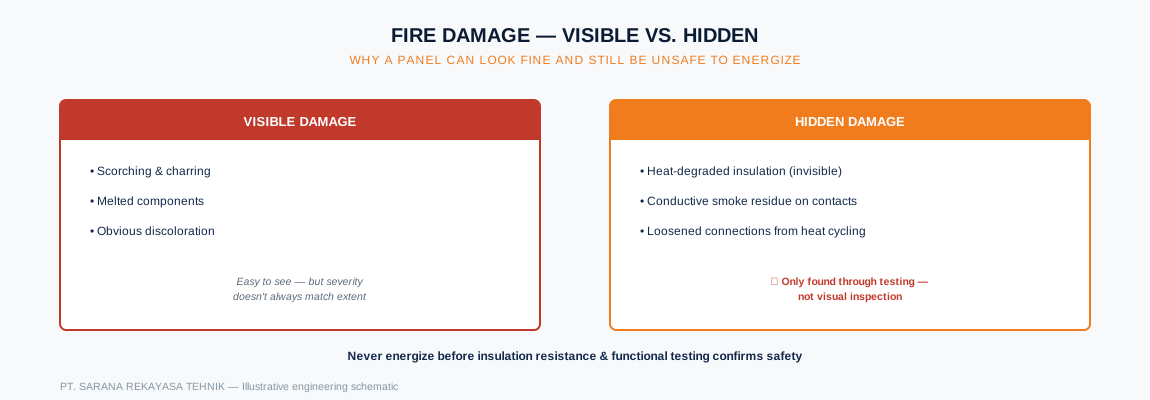
Unlike many damage causes, fire rarely acts through a single, uniform mechanism. A fire event affecting an electrical panel can introduce thermal damage to insulation and components, corrosive and conductive smoke contamination that settles on internal surfaces, and — where firefighting response was involved — water exposure with its own separate damage mechanisms. These effects don't always correlate with how visibly burned the panel appears.
This is the central engineering challenge: a panel positioned near a fire, or exposed primarily to smoke rather than direct flame, can sustain functionally significant damage while looking largely intact — while a component with obvious surface scorching may, on testing, prove less compromised internally than assumed. Visual inspection alone cannot reliably distinguish between these cases.
Fire Damage Mechanisms Affecting Electrical Panels
| Mechanism | Effect |
|---|---|
| Thermal damage to insulation | Heat exposure degrades wire and component insulation, reducing dielectric strength even without visible charring |
| Smoke and soot contamination | Conductive and corrosive residue settles on busbars, contacts, and internal surfaces, risking tracking faults and long-term corrosion |
| Heat-affected connections | Thermal cycling can loosen or degrade connection points, particularly at busbars and terminal blocks |
| Water damage from firefighting response | Where suppression involved water, the panel may also carry water-related insulation and corrosion risk |
| Component-specific heat sensitivity | Electronic components (PLCs, sensitive control circuitry) often have lower heat tolerance than the panel's structural and power components |
Why "If It Still Works" Testing Is Dangerous
Never energize a fire or smoke-exposed panel before testing confirms it is safe to do so.
Heat-degraded insulation may not fail immediately upon energizing — it can fail progressively or under specific load conditions, creating a delayed fault or fire risk rather than an immediate, obvious failure. Smoke-contaminated surfaces can create tracking paths between conductors that aren't apparent without close inspection. Energizing based on the panel "looking fine" bypasses the testing that exists specifically to catch damage that visual inspection cannot.
The Fire Damage Assessment Process
- Safety isolation and initial documentation. The panel is confirmed de-energized and isolated before any inspection begins, with as-found condition photographed prior to any cleaning.
- Visual inspection for direct fire/heat damage. Identifying areas of scorching, melting, or discoloration, and their proximity to critical components.
- Smoke and contamination assessment. Evaluating soot and residue coverage even in areas without direct heat exposure, since smoke travels beyond the immediate fire zone.
- Insulation resistance testing. Testing across circuits to identify insulation degradation not visible externally — the same principle covered in Flood-Damaged Electric Motor Recovery → for water-affected insulation applies here for heat-affected insulation.
- Component-by-component inspection. Breakers, contactors, terminal blocks, and busbars are individually assessed, since heat sensitivity and damage significance vary by component type.
- Root cause consideration. Determining whether the fire originated from a fault within the panel itself (an internal electrical fault) versus an external fire source reaching the panel — a distinction relevant to both safety corrective action and insurance evaluation.
Recovery Levels for Fire-Damaged Panels
| Level | Typical Scope | Indication |
|---|---|---|
| Cleaning & Decontamination | Smoke residue removal, verification testing | Smoke exposure only, no direct heat damage, testing confirms insulation intact |
| Selective Component Replacement | Replacement of specific heat-affected breakers, contactors, or wiring sections | Localized heat damage, remainder of panel tests within acceptable parameters |
| Major Reconditioning | Extensive component replacement, busbar and connection rework | Widespread heat exposure across multiple components, structural enclosure remains sound |
| Full Panel Replacement | Complete panel replacement | Extensive structural or widespread component damage makes recovery impractical or uneconomical relative to replacement |
Recovery vs. Replacement: Additional Factors for Panels
- Panel age and obsolescence. A fire event affecting an already-aging or component-obsolete panel may make replacement — potentially with a modernized design — more practical than sourcing increasingly scarce replacement parts.
- Safety certification requirements. Depending on the panel's application and applicable local requirements, fire-affected electrical equipment may warrant formal re-certification or inspection sign-off before return to service — a requirement that should be confirmed for the specific facility and jurisdiction.
- Extent of heat exposure across components. Isolated heat damage supports selective repair; widespread exposure across multiple critical components shifts the balance toward full replacement.
- Downtime and production criticality. Where the panel serves a critical, single-point process, faster full replacement may outweigh a longer selective recovery timeline.
Fire Damage, Root Cause, and Insurance
Where a fire originates from an internal electrical fault, root cause investigation becomes central to both the safety corrective action and the insurance evaluation — the distinction between an external fire source and an internal fault has direct bearing on how the incident is understood and addressed. This connects to Root Cause Analysis: A Practical Approach → and the broader claims framework in Insurance Engineering Explained →. A practical example of fire damage recovery methodology is also covered in Fire Damage Recovery of a 3-Stage Rotary Dryer Using the BURCE Methodology →.
Key Takeaways
- Fire damage to panels combines thermal, smoke contamination, and sometimes water damage mechanisms — visible fire exposure alone doesn't indicate the full extent.
- Never energize a fire or smoke-exposed panel before insulation and functional testing confirms it is safe.
- Smoke-only exposure, without direct heat damage, still warrants assessment given corrosive and conductive residue risk.
- Recovery level should reflect component-by-component testing results, not overall visual impression of fire severity.
- Panel age, obsolescence, and safety certification requirements are additional factors specific to electrical panel recovery decisions.
Have a fire or smoke-affected electrical panel and need a safety-focused technical assessment? SRT's engineering team can conduct testing-based evaluation before any decision to recover or replace.
Frequently Asked Questions
Can a fire-damaged electrical panel be repaired instead of replaced?
Sometimes, depending on the extent of heat exposure and whether internal components — busbars, contactors, wiring insulation — remain within safe operating condition, confirmed through testing rather than visual inspection alone.
Should a fire-damaged panel be tested by energizing it?
No. A fire or smoke-exposed panel should never be energized before insulation resistance testing and thorough inspection confirm it is safe, given the risk of hidden thermal damage to insulation or components.
Can smoke damage a panel without visible fire exposure?
Yes. Smoke carries conductive and corrosive residue that can contaminate components and degrade insulation even in a panel that shows no direct fire or heat damage, which is why smoke-exposed panels still warrant assessment.
What should be tested on a fire or smoke-damaged panel?
Insulation resistance across circuits, visual and functional inspection of breakers and contactors, continuity testing, and where heat exposure was significant, closer inspection of busbars and connection points for thermal damage.
Why is fire damage assessment different from other causes of electrical damage?
Fire introduces combined thermal, smoke contamination, and often water damage (from firefighting response) simultaneously, and determining whether the fire originated from an electrical fault within the panel itself is a distinct root cause question relevant to both safety and insurance evaluation.
Related Reading
The broader recovery decision framework this article extends.
Fire damage recovery methodology applied to a rotary dryer, from assessment to commissioning.
>60% cost saving through evidence-based recovery vs. full replacement.
Determining whether a fire originated from an internal fault or external source.
Measurement-based assessment principles that apply across damage causes.
Part of the complete guide: What is Machine Recovery? A Complete Guide →