
The decisions made — and the evidence preserved or lost — in the first 24 hours after machine damage often shape the entire recovery and claims process that follows.
Executive Summary. The first 24 hours after industrial machine damage are frequently when the most consequential and irreversible mistakes happen — evidence is cleaned away before documentation, damaged equipment is energized before testing, or informal repair begins before assessment. This checklist sets out the practical steps to take immediately after a damage event: safety isolation, evidence preservation, documentation, and who to involve — along with the specific actions to avoid until a proper technical assessment has taken place.
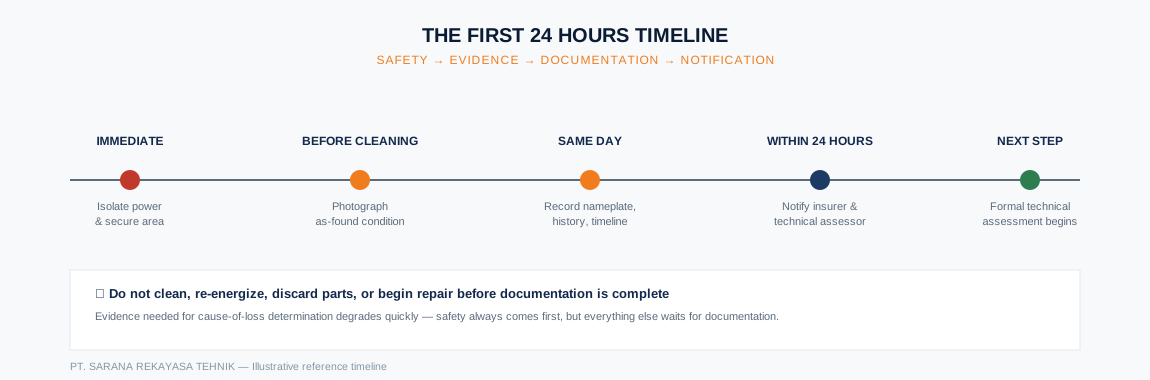
Why the First 24 Hours Matter
Evidence needed to determine cause of loss and extent of damage — water lines, contamination residue, component condition, as-found electrical readings — begins degrading or disappearing almost immediately after a damage event. Cleanup, well-intentioned emergency repair, and simply moving equipment can each remove information that would otherwise support an accurate assessment or a defensible insurance claim.
At the same time, urgency to restore production creates pressure to move quickly — sometimes faster than is actually safe or technically sound. This checklist is designed to balance both: acting promptly, without compromising safety or the evidentiary record.
Isolate the machine electrically and mechanically
Lock out power and any energy sources before anyone approaches or inspects the equipmentSecure the area
Prevent unnecessary access or movement of equipment until initial documentation is completePhotograph as-found condition — before touching anything
Wide shots for context, close-ups of visible damage, water lines, staining, or debrisRecord nameplate and identification data
Manufacturer, model, serial number, rated specificationsNote the sequence of events
When damage was discovered, under what operating conditions, and what immediate actions were already takenGather available operating and maintenance history
Prior service records, any earlier test results, known pre-existing issuesNotify relevant stakeholders
Insurance provider (where applicable), maintenance/engineering management, and a technical assessorRetain any failed or removed components
Do not discard parts removed during emergency response — they may be needed for physical examinationUnduh Versi PDF — Bisa Dicetak & Ditempel
Checklist 1 halaman siap cetak untuk ditempel di ruang kontrol atau dibawa tim lapangan.
What NOT to Do Before Assessment
Avoid these actions until a technical assessment has documented as-found condition:
- Cleaning contamination, sediment, or debris from the machine
- Energizing or attempting to run the equipment "just to see if it still works"
- Discarding failed components, even if a replacement has already been sourced
- Beginning informal or emergency repair beyond what safety strictly requires
- Moving the equipment from its as-found location and orientation, where practical to avoid
Each of these actions is understandable under production pressure — but each also risks removing or altering evidence that a proper root cause and damage assessment depends on. Where a genuine emergency safety requirement conflicts with evidence preservation, safety always takes priority — but the conflict should be documented (what was done, and why) rather than left unrecorded.
Documentation That Actually Helps an Assessment
- Wide-angle photographs showing the machine's position and surroundings, establishing context for the damage.
- Close-up photographs of specific damage points, water lines, corrosion, burn marks, or visible component failure.
- Nameplate photographs — manufacturer, model, serial number, and rated specifications, which determine applicable acceptance criteria later in the assessment.
- Timeline notes — even brief, contemporaneous notes on when the damage was discovered and what was observed are more reliable than reconstructing the sequence from memory days later.
Who to Involve — and When
Depending on the situation, several parties may need to be notified within the first 24 hours: internal maintenance or engineering management, the facility's insurance provider (where the damage may be the subject of a claim), and an independent technical assessor to begin the formal damage assessment and, where relevant, root cause investigation.
Involving a technical assessor early — rather than after informal cleanup or repair has already begun — significantly improves the quality and defensibility of the resulting assessment. This is covered in more detail in Insurance Engineering Explained →, particularly where a claim is anticipated.
Damage-Type Specific Notes
While the checklist above applies broadly, certain damage causes warrant additional immediate attention:
- Flood/water damage: Note the approximate water level reached on the equipment before it recedes or is cleaned — this detail is difficult to reconstruct later. See Flood-Damaged Electric Motor Recovery → for the assessment process that follows.
- Fire damage: Avoid disturbing debris or soot patterns before photographs are taken, as these can carry information relevant to the fire's origin and spread.
- Mechanical failure: Retain any dislodged or fractured components exactly as found — fracture surfaces and wear patterns are often central to determining root cause.
What Happens After the First 24 Hours
Once immediate safety, evidence preservation, and initial documentation are complete, the process transitions into formal technical assessment — electrical and mechanical testing, root cause investigation where warranted, and development of a recovery strategy. This broader process is covered in What is Machine Recovery? A Complete Guide →.
Key Takeaways
- Safety isolation always comes first — no documentation or inspection should begin before the equipment and area are confirmed safe.
- Evidence preservation and cleanup are in tension — document as-found condition thoroughly before any cleaning begins.
- Never re-energize or run damaged equipment before testing confirms it is safe to do so.
- Retain failed or removed components — they may be needed for physical examination during assessment.
- Involve a technical assessor as early as practical, ideally before informal cleanup or repair begins.
Just experienced machine damage and need technical assessment support? SRT's engineering team can guide immediate response steps and conduct a structured damage assessment.
Frequently Asked Questions
What is the first thing to do after industrial machine damage?
Ensure the area and machine are electrically and mechanically isolated and safe, before anything else — including before any documentation or cleaning begins.
Should a damaged machine be cleaned before assessment?
No. Cleaning should wait until as-found condition has been fully documented with photographs, since cleaning can remove or alter evidence needed to determine cause of loss and extent of damage.
Should a damaged motor or machine be tested by switching it on?
No. Energizing or running damaged equipment before electrical and mechanical testing confirms it is safe to do so risks further damage and personal safety hazards.
What photographs should be taken after machine damage?
Wide shots showing the machine in context, close-ups of visible damage, nameplate details, and any water lines, staining, or debris — captured before any cleaning or disassembly begins.
When should a technical assessor be contacted after machine damage?
As early as practically possible — ideally within the first 24 hours — since evidence needed for root cause determination can degrade or be lost the longer recovery work is delayed or informally begun.
Related Reading
The full recovery decision process this checklist feeds into.
A detailed walkthrough of assessment following the immediate response.
Why evidence preserved in the first 24 hours matters for root cause investigation.
How early evidence preservation supports a defensible insurance claim.
The complete documentation checklist beyond the first 24 hours.
Part of the complete guide: What is Machine Recovery? A Complete Guide →
Past the first 24 hours and need more structured documentation? Fill out our Machine Investigation Questionnaire →